
In short
For noise from the next apartment, the most effective solution is an independent lining with mineral wool and double acoustic board that does not touch the old wall. For cold or heat, insulation goes on the outside walls or on the ceiling under the roof.
Sound insulation: what really helps
Sound passes through the wall and through every gap. Good sound insulation has three parts: mass (double or acoustic board), absorption (mineral wool inside the frame) and decoupling (the new wall does not touch the old one, and resilient tape goes at the edges).
Egg-box foam and thin polystyrene do not insulate against sound. They absorb a little echo inside the room, but do not stop noise from next door.
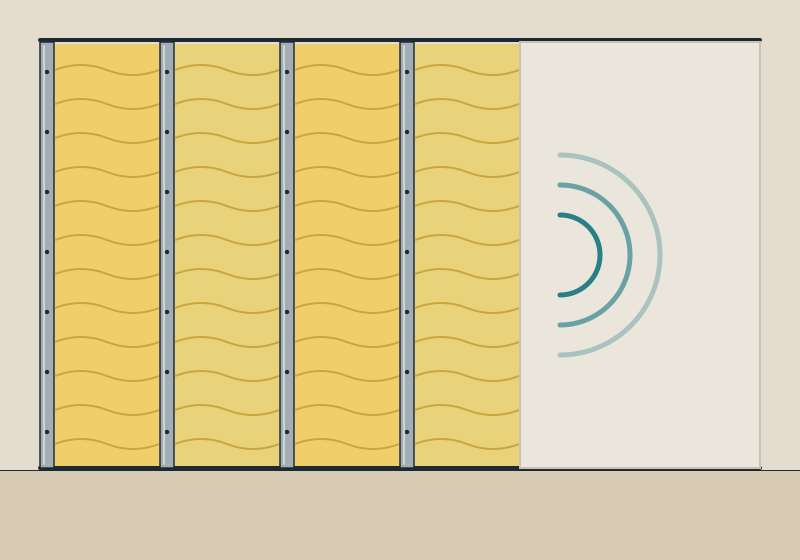
Thermal insulation from inside
When external insulation is not possible, for example in an apartment block, insulating from inside is the practical answer. With 5–8 cm of stone wool and drywall, the wall stops feeling cold to the touch and the air conditioner works less.
On ceilings under a tiled roof or in attics, insulation above the suspended ceiling makes the biggest difference in summer.
Damp and vapour barriers
With insulation on the inside, warm indoor air must not reach the cold wall, or it condenses. Where needed we add a vapour-barrier membrane or boards with a built-in barrier. In Loutraki, with the humidity from the sea, this matters.
Sound insulation in hotels and holiday lets
Guest reviews often mention noise from the next room. A sound-insulating lining on the party wall takes a few days per room, out of season. See the hotels page.


